
In DIY solar communities, one debate keeps coming back again and again: Are lead-acid batteries actually more cost-effective than LiFePO4?
A user on a DIY solar forum once shared a fairly typical side-by-side calculation. At first glance, lead-acid looks like the cheaper option.
But that comparison only tells part of the story.
The Original DIY Comparison
The assumptions were:
- Inverter efficiency: 82%
- Lead-acid usable DOD: 50%
- LiFePO4 usable DOD: 85%
🔋 Flooded Lead-Acid (FLA)
Using Costco GC2 6V 210Ah batteries:
- 3P2S configuration for 12V system
- Usable capacity: ~262.5Ah
- Effective energy output: ~2.58 kWh (after inverter losses)
- Total cost: around $600
At first glance, this looks reasonable.
⚡ LiFePO4
Using 271Ah lithium cells:
- 4S configuration for 12.8V system
- Usable capacity: ~230 Ah
- Effective energy output: ~2.4 kWh
- Total cost: around $600 (cells + BMS + accessories)
On paper, the difference doesn’t look dramatic.
So, is lead-acid actually the better deal?
The Problem With This Conclusion
The issue is not the math itself, but what is missing from it.
This kind of comparison only looks at initial cost and nominal energy but ignores how these batteries behave in real systems. And that changes everything.
1. Usable Capacity Is Not Equal
This is the biggest misconception.
- Lead-acid: realistically ~50% usable depth of discharge
- LiFePO4: up to ~100% usable in daily cycling
In real-world use, you are effectively getting almost double the usable energy from LiFePO4 for the same nominal capacity.
2. Cycle Life Changes the Entire Equation
This is where LiFePO4 completely separates itself:
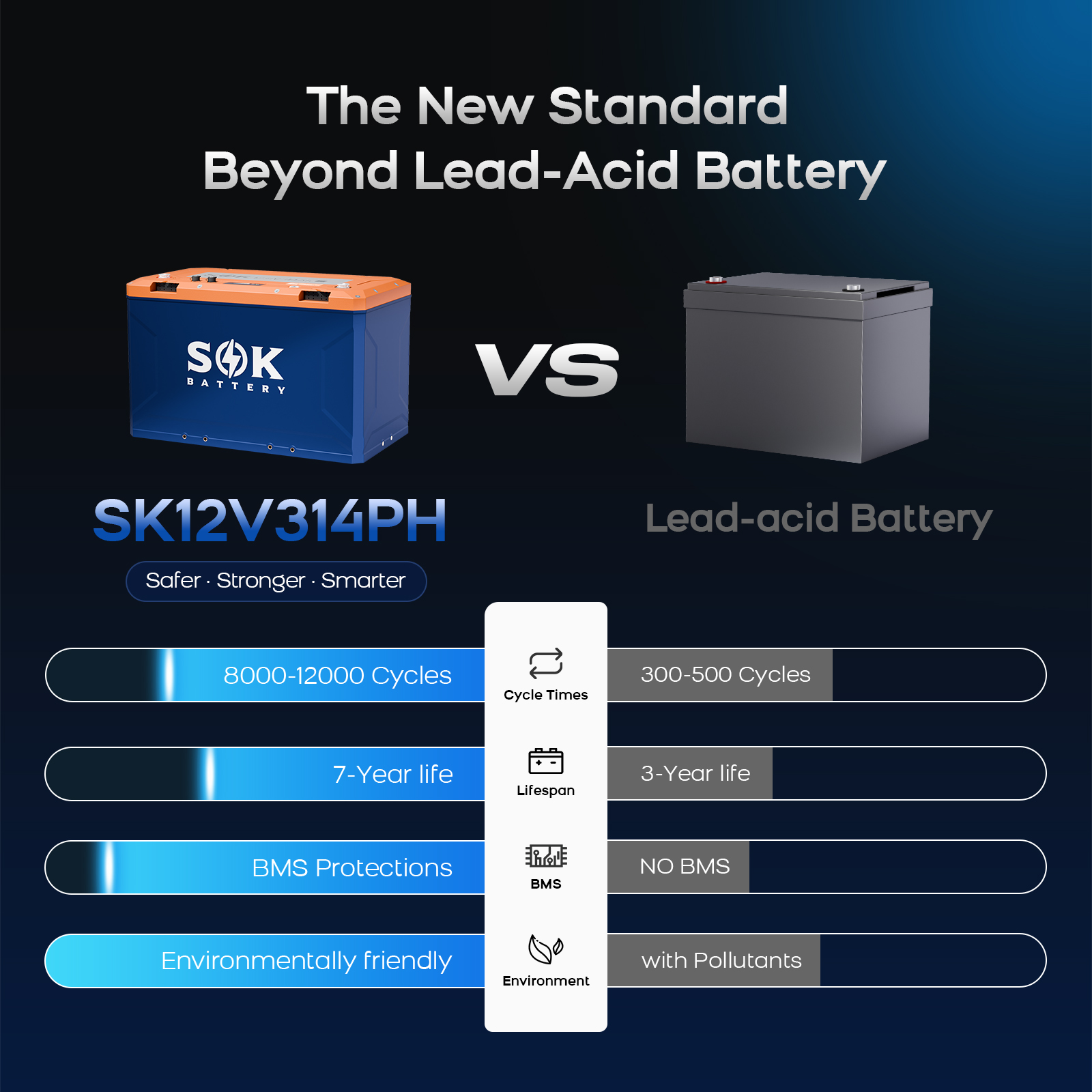
- Lead-acid: ~300–800 cycles (best case)
- LiFePO4: 3,000–10,000+ cycles
Even if the upfront cost looks similar, lead-acid systems often need multiple replacements over time.
And every replacement resets cost, labor, and downtime.
3. Efficiency Matters More Than People Think
|
Lead-acid |
~80–85% coulombic efficiency |
|---|---|
|
LiFePO4 |
~95–99% |
That difference may look small, but in off-grid systems it adds up quickly.
Lead-acid systems typically require:
- More solar capacity
- More charging time
- Tighter operating conditions
Just to achieve the same usable output.
The Hidden Cost: System Oversizing
Lead-acid batteries are sensitive to how they are used.
To keep them alive, you often need to:
- Avoid deep discharge
- Keep them at a higher state of charge
- Ensure frequent full recharge cycles
That usually means: Bigger solar arrays and more expensive system design.
So the “cheap battery” often leads to a more expensive system.
Failure Behavior Is Very Different
Another overlooked point is what happens when things go wrong. In practice, that means less waste and longer usable life.
Why DIY Builders Trust Certain Designs
In the European DIY solar space, there is a strong preference for systems that are:
- Mechanically solid
- Serviceable
- Transparent in construction
This is where brands like SOK gained attention in the community.
Not because of marketing, but because of what people saw when they opened them up:
- Bolted internal structure instead of glue
- Metal enclosure instead of plastic casing
- Repairable BMS design
- Grade-A cells and solid busbar layout
For a DIY user, this matters more than branding.
LiFePO4 Battery Real-World Advantage: Cold Weather Performance
In Europe, especially in colder regions, one practical issue often decides battery choice:
Winter charging at low temperatures. Charging lithium batteries below 0°C can damage cells if not managed properly.
SOK LiFePO4 systems solve this with built-in self-heating:
- The battery detects low temperature
- Uses incoming charge to warm cells first
- Automatically switches to charging once safe
This makes winter operation much more reliable for off-grid setups.
Final Thoughts
If you only look at the upfront cost, lead-acid can still appear attractive.
But once you factor in:
- Usable capacity
- Cycle life
- Efficiency losses
- System oversizing
- Replacement frequency
The picture changes quickly.
In most off-grid and solar applications, LiFePO4 is not just a “better battery” — it is often the more economical system over time.
A Simple Way to Think About It
Lead-acid is cheaper when you buy it. LiFePO4 is cheaper when you live with it.
And in off-grid energy systems, what matters most is not the purchase moment, but the next 5 to 10 years of operation.